
A-1 Welding Classes: Carbon Steel vs Mild Steel
Today we're talking about the difference between carbon steel and mild steel. You might be wondering, aren't they basically the same thing? Well, not quite! While they share a lot of similarities, the key difference lies in their carbon content. Let's take a look at what that means.
Carbon steel has a higher carbon content generally ranging from 0.30% to over 2%. This added carbon significantly increases its hardness and strength. It's the go to material when you need something that can withstand significant stress, abrasion, and impact. This is why you'll find carbon steel in tools like knives, springs, and even high performance vehicle parts. The trade off for this increased strength is that it can be a bit more challenging to weld and shape compared to mild steel.
Mild steel has a lower carbon content and contains typically 0.05% to 25% of carbon. This makes it more ductile and easier to work with bending, shaping, and welding. It's a fantastic choice for general construction, car bodies, and everyday items where extreme strength isn't the primary concern. So, when you're choosing between the two, it really comes down to your project's needs. If your project demands superior hardness, strength, and wear resistance, carbon steel will be the more suitable option. But if your project needs something that's easy to form and weld for general purposes, mild steel is likely your best bet.
Both carbon steel and mild steel have their own properties which makes them suitable for various purposes and understanding these fundamental differences will help you make informed decisions to help achieve the best results for your metal creations!!
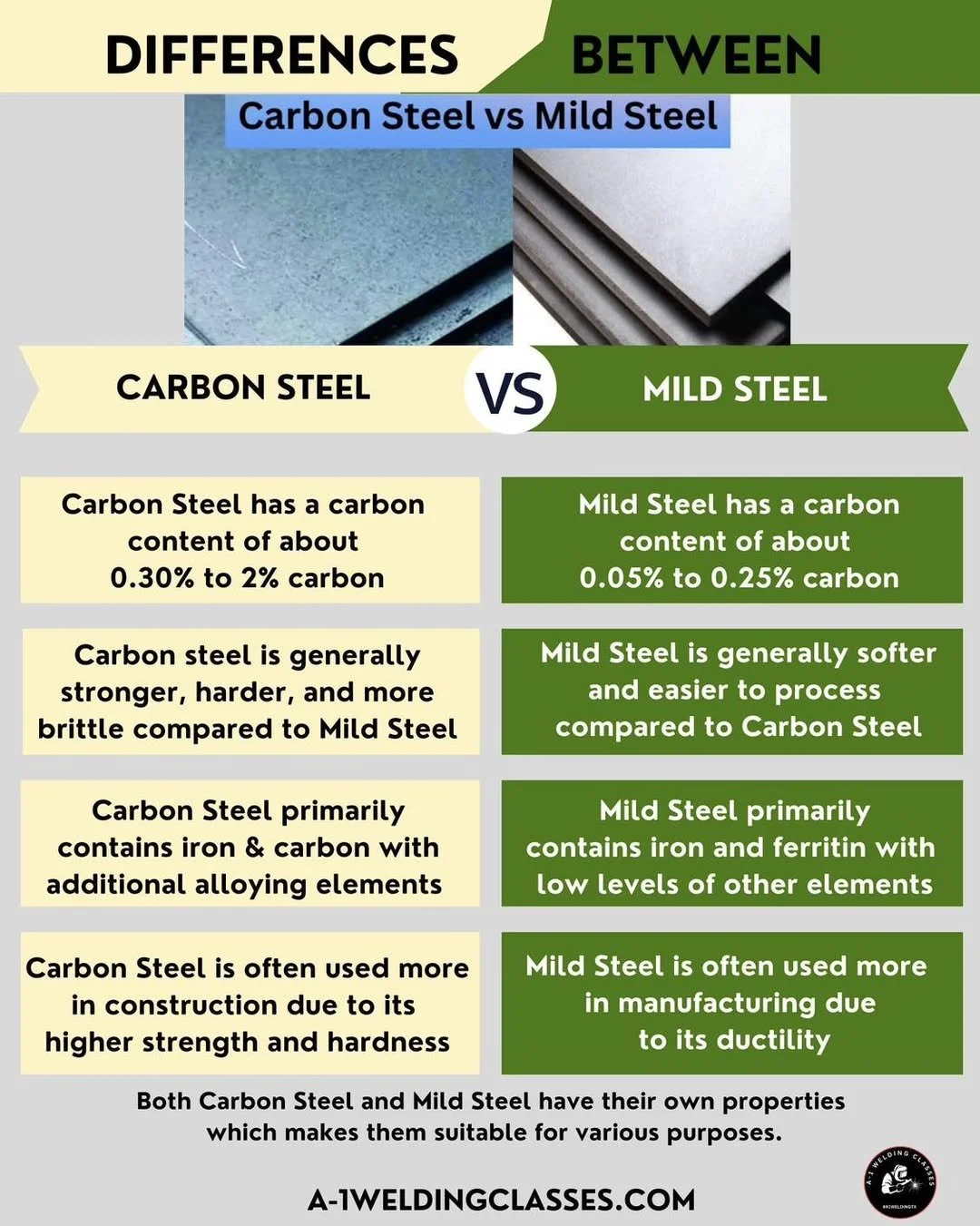
Carbon Steel:
Carbon Steel has a carbon content of about 0.30% to 2% carbon
Carbon steel is generally stronger, harder, and more brittle compared to mild steel
Primarily contains iron & carbon with additional alloying elements
Is often used more in construction due to its higher strength and hardness
Mild Steel:
Mild Steel has a carbon content of about 0.05% to 0.25% carbon
Generally softer and easier to process compared to Carbon Steel
Primarily contains iron and ferritin with low levels of other elements
Often used more in manufacturing due to its ductility
Teaching a Trade That Never Fades