Learning The Key Aspects of Welding
One of the most rewarding aspects of learning to weld is the sense of accomplishment that comes with creating something tangible!! Imagine taking raw materials and transforming them into a beautiful piece of art or a functional item. It’s a skill that not only enhances your creativity but also boosts your confidence as you see your ideas come to life. Welding is more than just joining metal; it’s an art form that combines precision, technique, and a bit of science. As you start your journey, you’ll discover various welding methods, such as MIG, TIG, Flux Core and Stick Welding, each with its own unique applications and benefits. Understanding these techniques can empower you to tackle a wide range of projects, from crafting intricate sculptures to repairing machinery, and beyond.
Safety
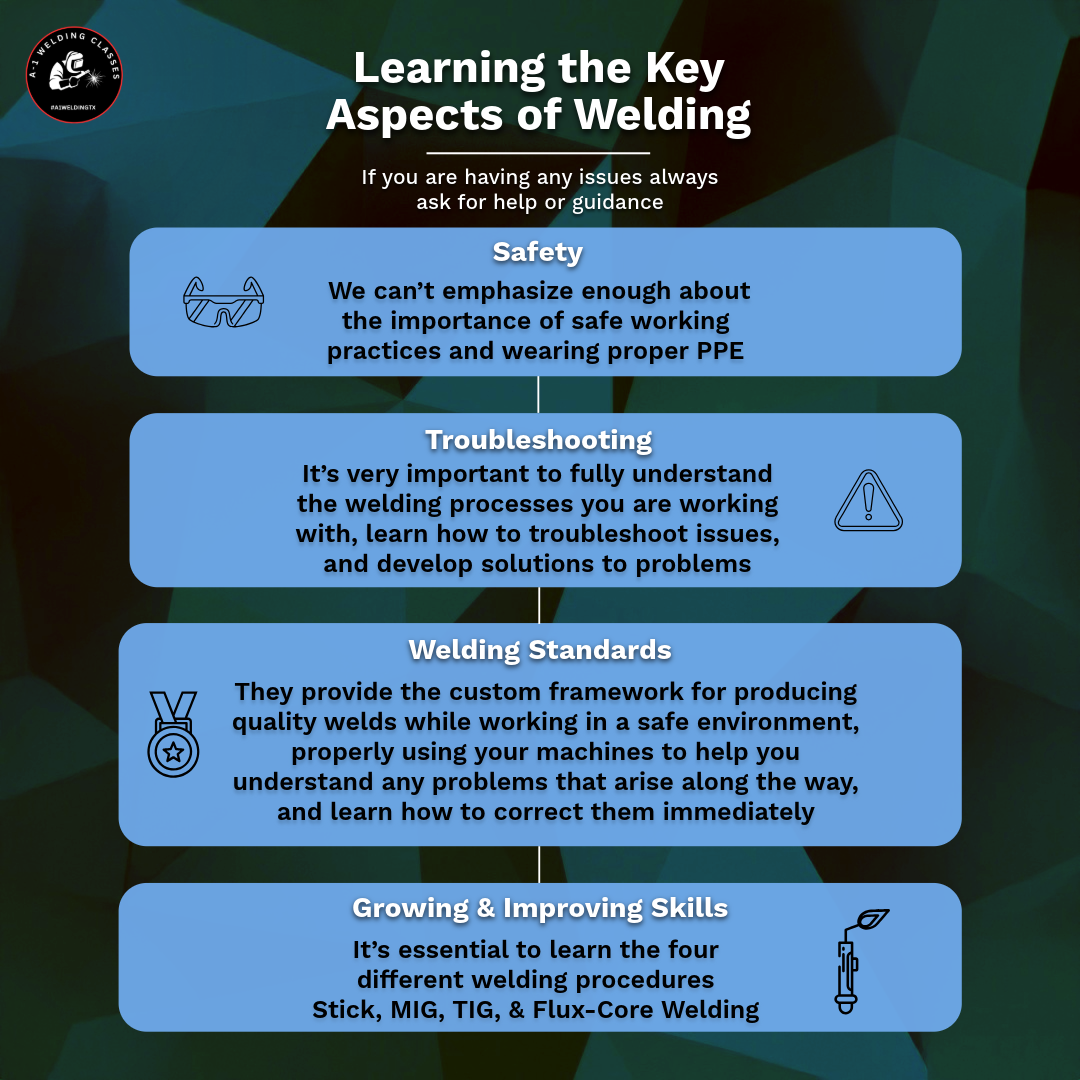
We can’t emphasize enough about the importance of safe working practices and wearing proper PPE
Troubleshooting
It’s very important to fully understand the welding processes you are working with, learn how to troubleshoot issues, and develop solutions to problems
Welding Standards
They provide the custom framework for producing quality welds while working in a safe environment, properly using your machines to help you understand any problems that arise along the way, and learn how to correct them immediately
Growing & Improving Skills
It’s essential to learn the four different welding procedures Stick, MIG, TIG, & Flux-Core Welding
As you embark on this journey, remember that practice is key. Don’t be discouraged by initial challenges, every experienced welder was once a beginner too. So, Embrace the learning process and celebrate your progress along the way. Joining our welding classes can provide you with invaluable support and guidance, connecting you with an experienced welder who can share his insights and knowledge through his teaching. We hope this inspired you to want to explore the aspects of welding and all the possibilities it offers.
Teaching a Trade That Never Fades