Flux-Core (FCAW) vs MIG Welding (GMAW): Choosing the Right Method
If you've ever wondered which one might be right for your next project, or just curious about how they work, you're in the right place. First, let's discuss flux-core welding (FCAW) this method uses a hollow wire filled with flux that generates its own shielded gas when burned. This flux serves a dual purpose, as the wire melts, the flux creates its own shielding gas, meaning you don't always need an external gas cylinder. This makes flux-core incredibly portable and ideal for outdoor projects or windy conditions, because of this self shielding capability and its ability to handle less than perfect surfaces, it is often the go to for thicker materials, structural steel, and heavy equipment repair. Flux-core welding, shines when you're dealing with thicker materials, less than ideal surface conditions, or when portability and outdoor welding are a priority, thanks to its self shielding nature. Now, let’s discuss MIG welding (GMAW) This process uses a solid wire electrode that's fed through a welding gun. As you pull the trigger, the wire melts, creating a weld pool, and a shielding gas, usually a mix of 75% argon and 25% CO2, is released to protect the molten metal from atmospheric contamination. Think of it as a protective bubble. It is fantastic for clean, precise welds, especially on thinner materials. It's often favored for its ease of use and the beautiful, spatter free beads it can produce, making it a great choice for automotive work, fabrication shops, and even hobbyists looking for that polished finish. MIG welding generally offers cleaner welds and is excellent for thinner metals and when you need that pristine finish. Both are incredibly valuable welding procedures for every welder to know and the best choice really depends on the specific demands of your project.
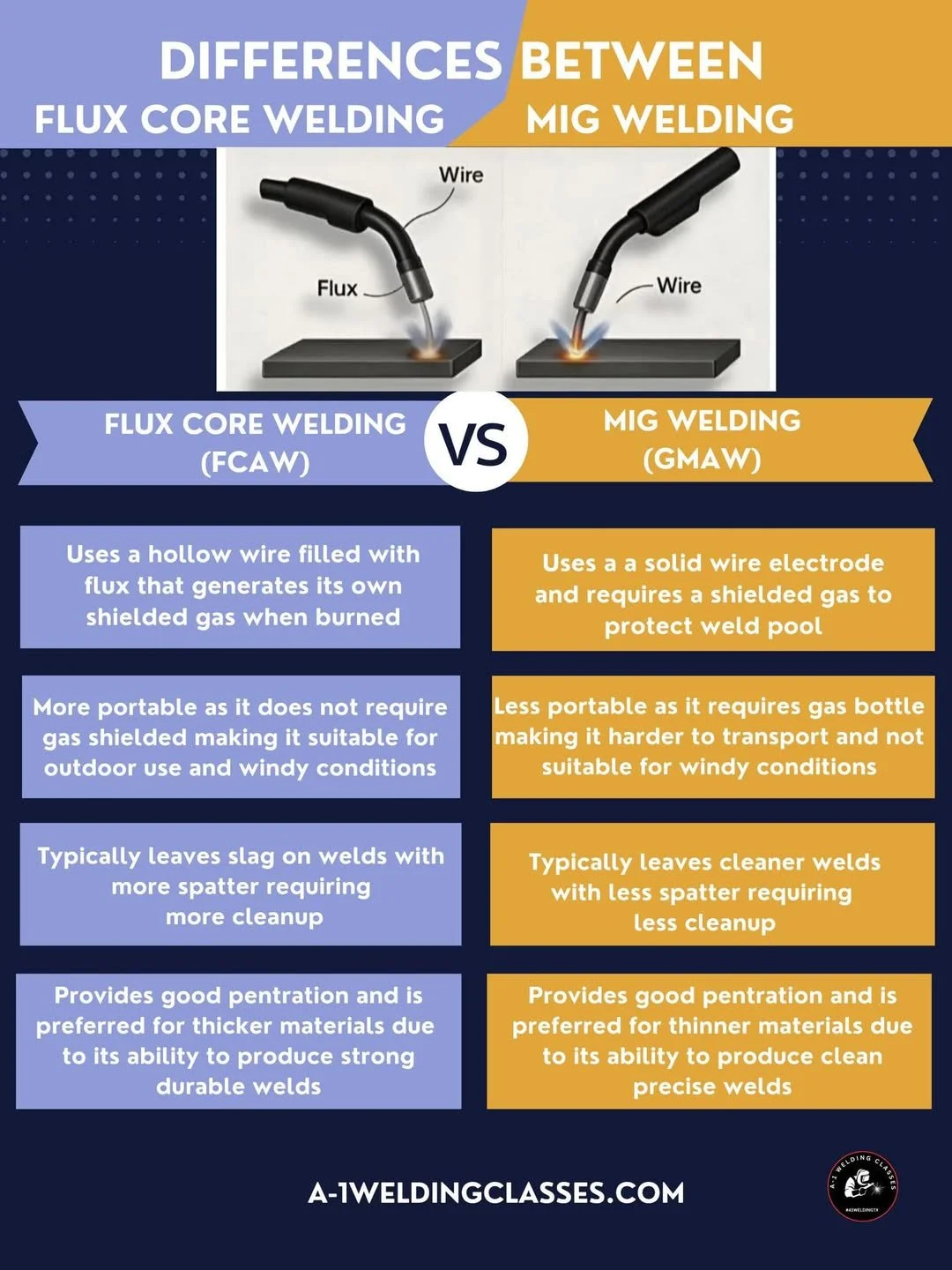
Flux-Core Welding (FCAW):
Uses a hollow wire filled with flux that generates its own shielded gas when burned.
More portable as it does not require gas shielded making it suitable for outdoor use and windy conditions.
Typically leaves slag on welds with more spatter requiring more cleanup.
Provides good penetration and is preferred for thicker materials due to its ability to produce strong durable welds.
MIG Welding (GMAW):
Uses a a solid wire electrode and requires a shielded gas to protect weld pool.
Less portable as it requires gas bottle making it harder to transport and not suitable for windy conditions.
Typically leaves cleaner welds with less spatter requiring less cleanup.
Provides good penetration and is preferred for thinner materials due to its ability to produce clean precise welds.
Teaching a Trade That Never Fades