
GMAW Diagram: The Components of a MIG Welding Gun
Knowing and understanding the components of a MIG welding gun is beneficial for several reasons, it helps you to recognize and resolve issues quickly, like poor wire feeding or inconsistent welds. Regular inspection and maintenance of the gun’s components can prevent unexpected failures and extend the equipment’s lifespan. Proper maintenance of parts like the contact tip and nozzle can lead to cleaner, more precise welds, check daily to make sure these are tight and undamaged. This allows welders to make informed decisions about consumables, which leads to better overall welding performance with the correct type of gun. By familiarizing themselves with the components of a MIG gun, welders can guarantee optimal performance and achieve consistent high quality results.
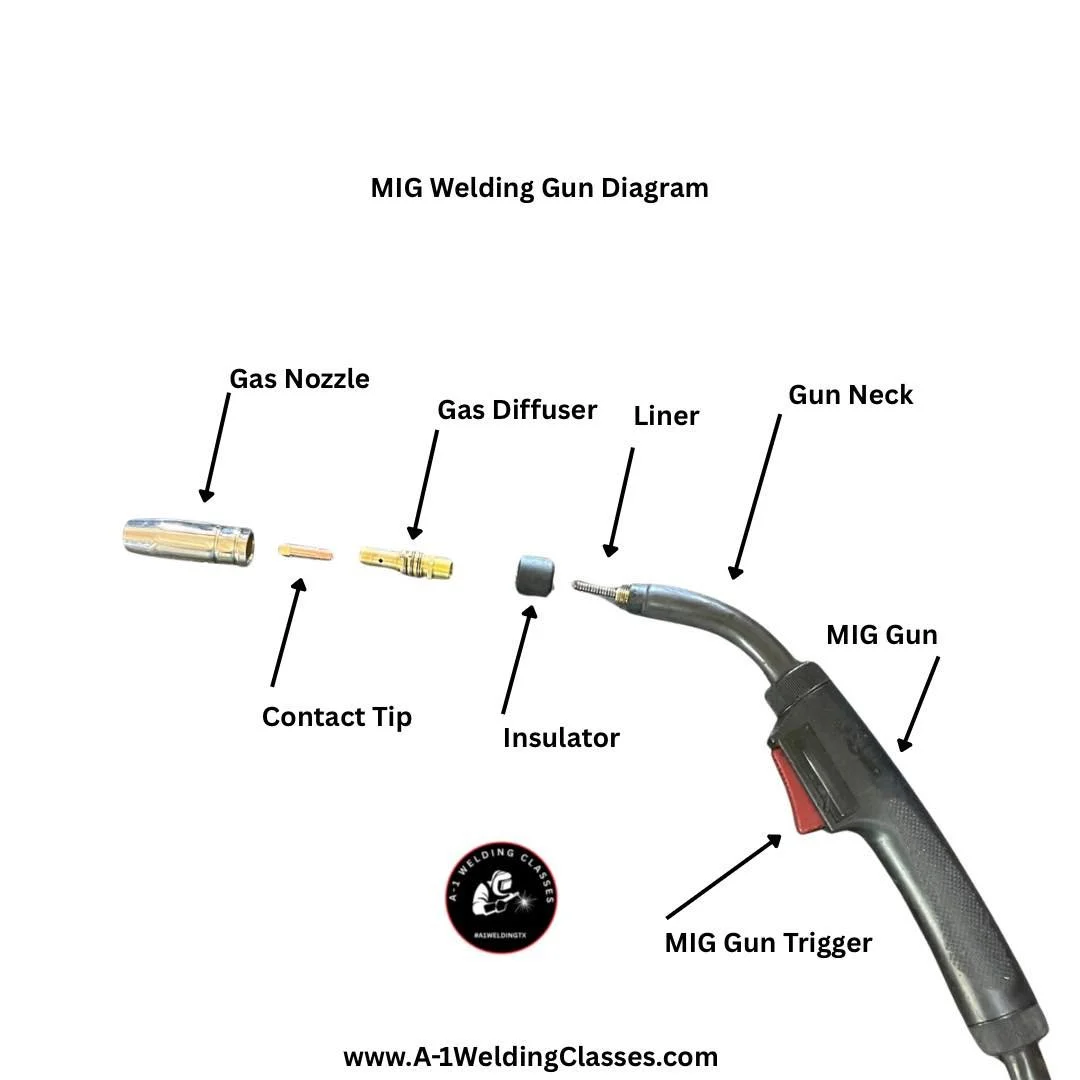
Understanding the components through this diagram helps you manage your MIG gun effectively, quickly solve problems, and improve your work.
Gas Nozzle: The purpose of the gas nozzle is to direct gas into the weld puddle and protect the contact tip from contamination.
Contact Tip: The contact tip threads into the diffuser, it is responsible for guiding the wire and transferring the current from the gun neck through the filler wire and into the weld.
Gas Diffuser: The diffuser has various holes that disperses gas and flows to the contact tip, the contact tip screws onto one end of the gas diffuser, the other end holds the liner in place.
Insulator: A thermal barrier that helps with electrical flow between circuit and gas nozzle.
Liner: The liner plays a very simple role within the welding operation, the liner guides the wire by providing a navigable passage for the welding wire to travel from the machine, through the cable and gun, to the weld.
Gun Neck: The neck houses all the components, directs welding wire and shielding gas.
MIG Gun Trigger: The MIG guns trigger is important for making the welding process happen, it starts the motor drive, feeds the wire, and controls the flow of shielding gas.
MIG Gun: The MIG gun has a continuous feed of MIG welding wire. It feeds the filler wire and releases shielding gases at the same time, which in turn creates the process of GMAW.
Teaching a Trade That Never Fades