A Look Into Understanding MIG Welding (GMAW): Some Tips & Tricks to Help You Along the way
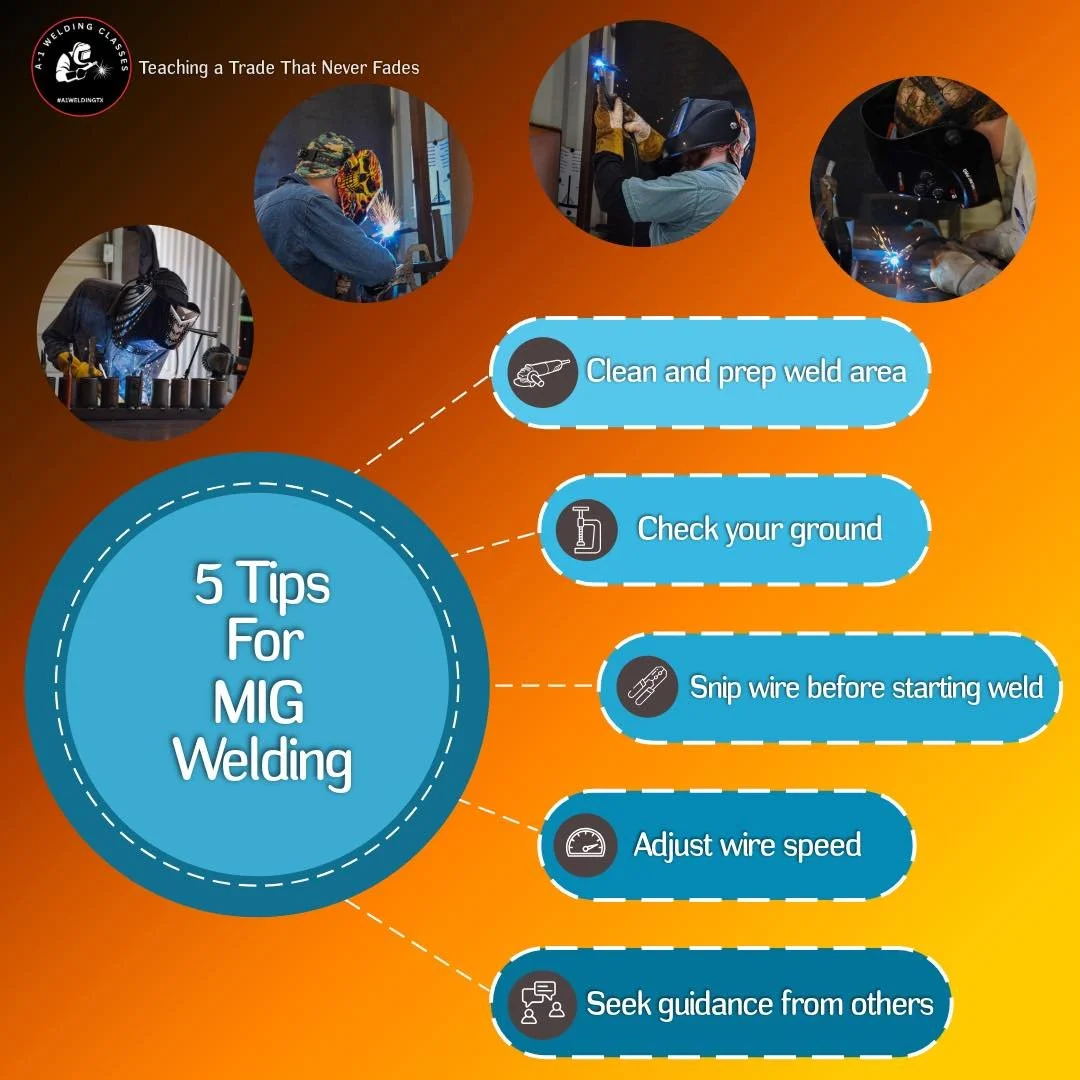
MIG Welding (GMAW) is very versatile and produces high quality welds. It’s easy to learn for beginners with the pull of a trigger, but it does have a lot of troubleshooting along the way. It’s an ongoing process of learning that takes time and dedication to master, but the beauty of it is that there's always room for improvement. Embrace the challenges and setbacks. Use them as opportunities to grow. We can help guide you through it with some tips below.
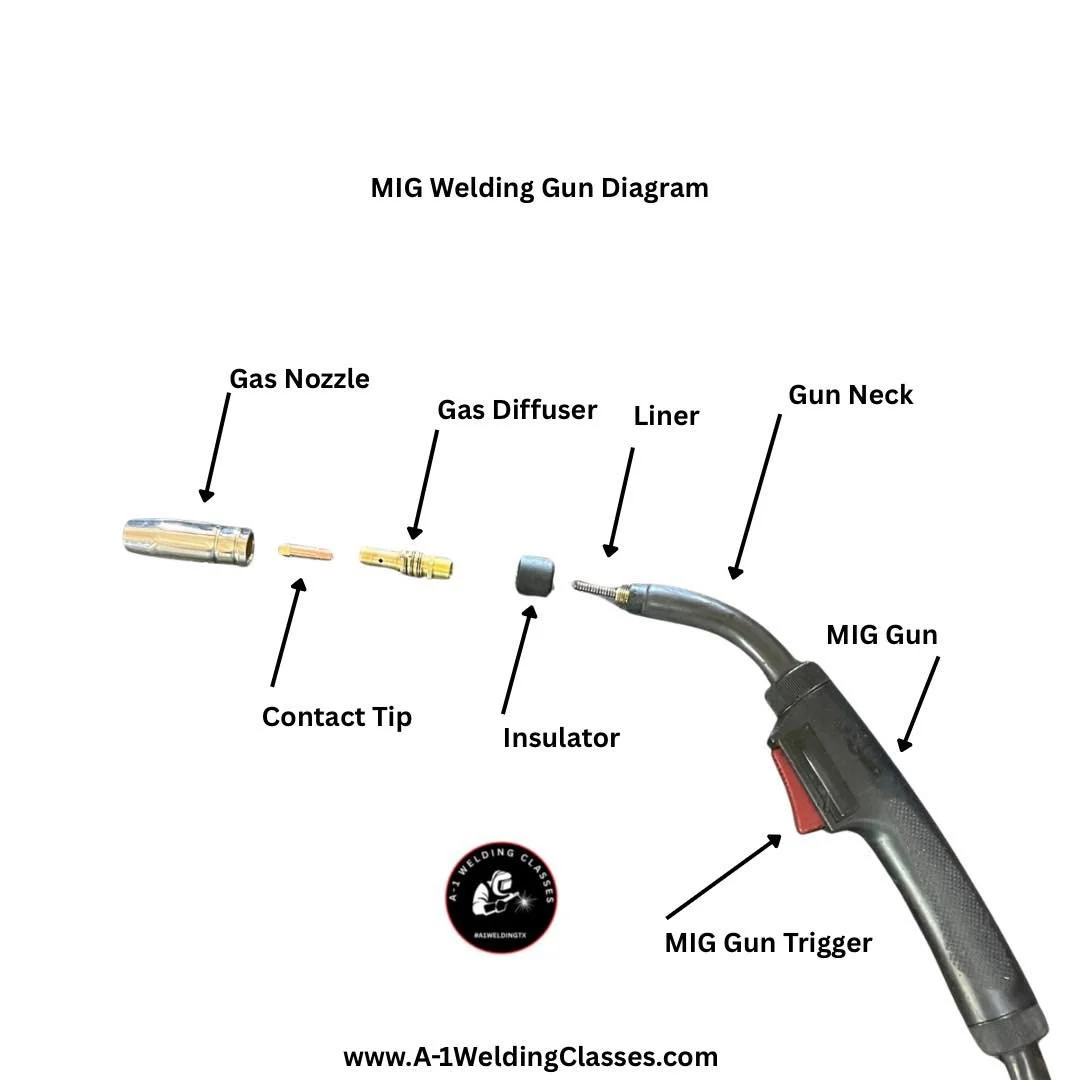
Knowing and understanding the parts of a MIG Welding gun is beneficial for so many reasons.
It helps you understand the components in identifying and resolving issues quickly, such as poor wire feeding or inconsistent welds. Regular inspection and maintenance of the gun's parts can prevent unexpected failures and extend the equipment's lifespan. Proper maintenance of parts like the contact tip and nozzle can lead to cleaner more precise welds. Knowing these parts allows welders to make informed decisions about the consumables and gun type leading to better overall welding performance. By familiarizing yourself with the MIG gun parts, welders can ensure optimal performance and achieve consistent high quality results. Understanding these parts through this diagram enables you to manage your MIG gun effectively, quickly solve problems, and improve your work.

Nozzle Dip is a Mig Welders Best Friend!!
You dip the hot gas nozzle into the gel, it creates a barrier that keeps the consumables clean, extends their life, and ensures smooth shielding gas flow for improved weld quality.
Don’t forget to take time to dip your gas nozzle while you’re welding!!
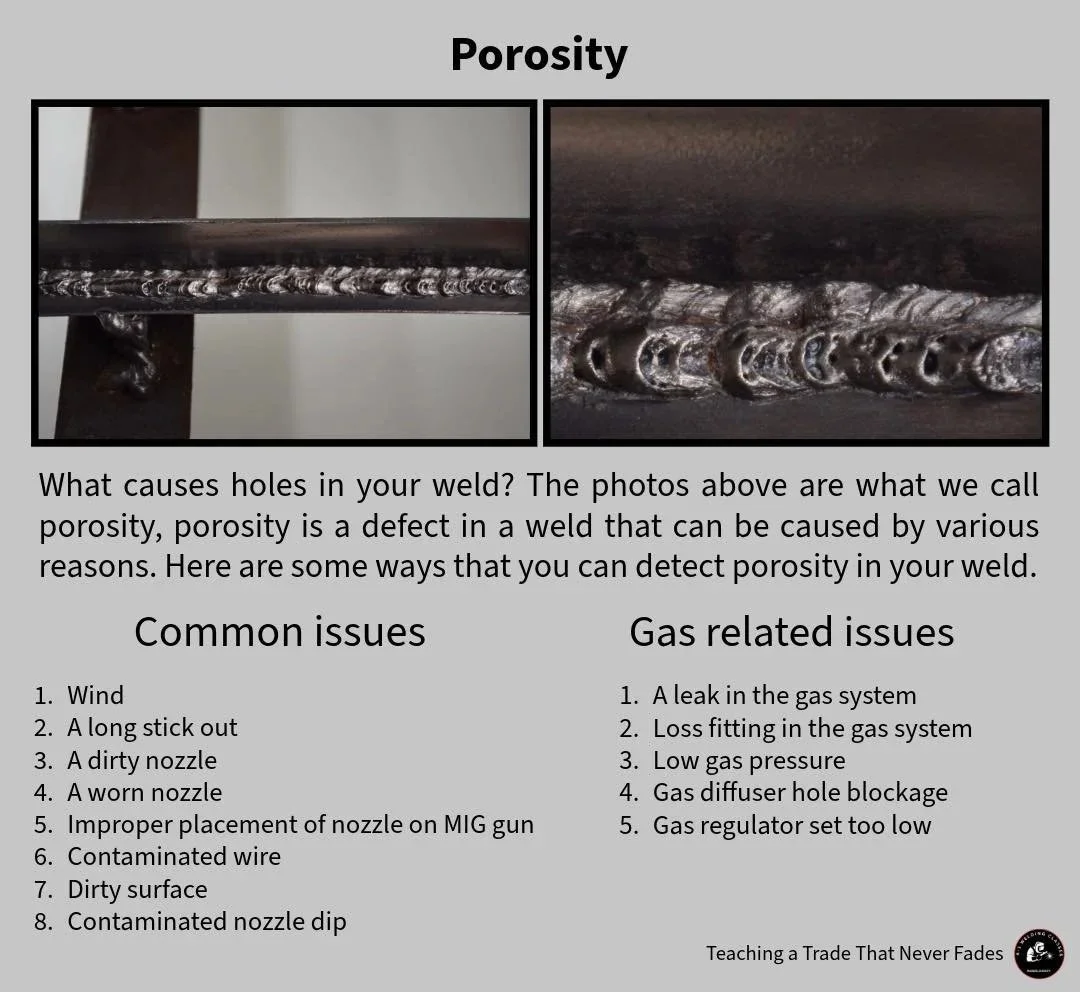
What causes holes in your welds? Porosity
Those holes are called Porosity and are primarily caused by trapped gases during the solidification of molten metal, often due to contamination, improper shielding gas application, and welding technique issues. Porosity is a defect in a weld that can be caused by various reasons. Sometimes it might be you or it might be the machine and hard to troubleshoot.
Here are some common ways we shared in picture that you can use to help detect what’s causing porosity in your weld.
Don’t forget…If porosity does occur, it must be removed to restore weld integrity by Completely grinding out the affected area to the base metal. Then weld the area again, starting slightly before the original defect to ensure proper fusion.
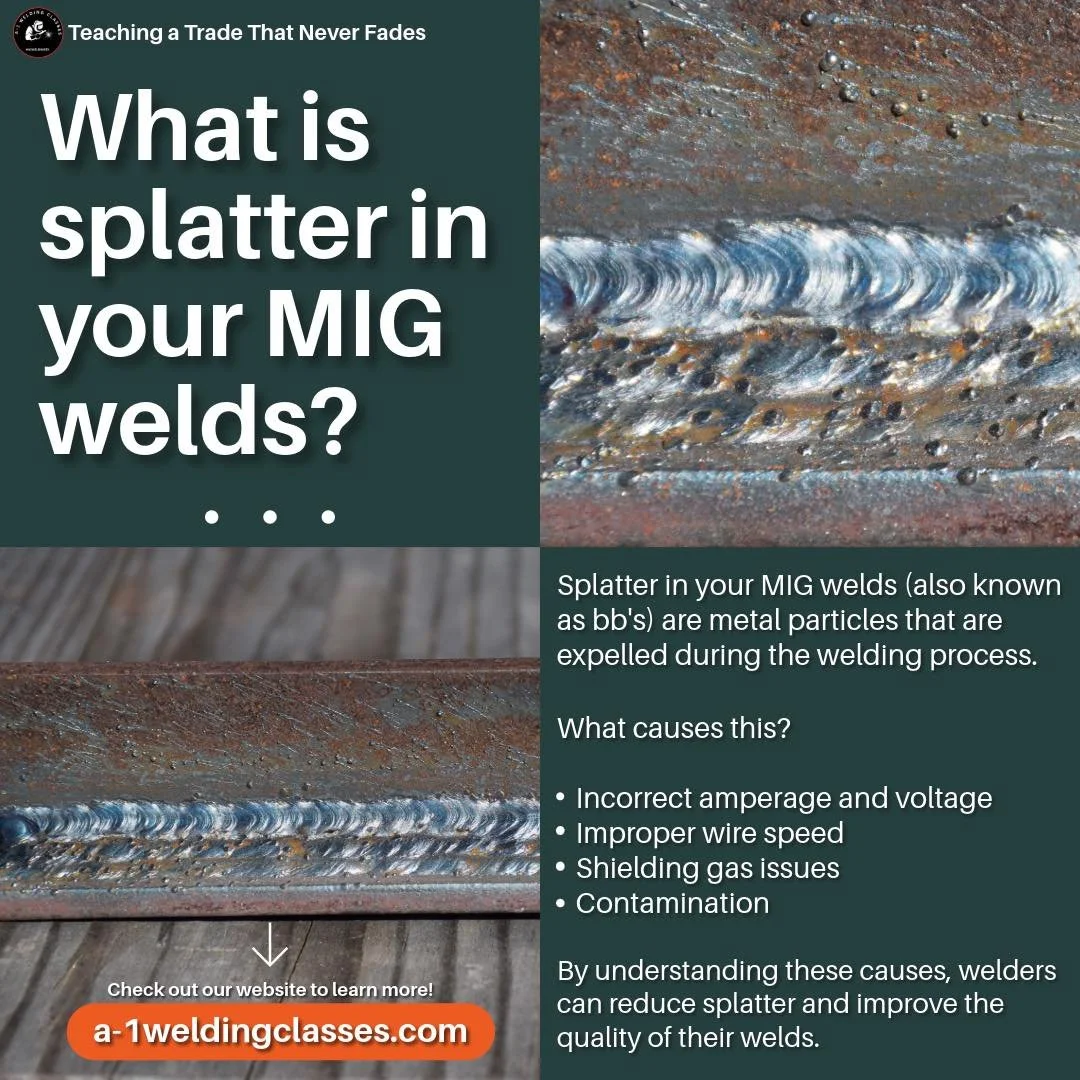
What is splatter in your MIG welds?
Splatter in your MIG welds (also known as bb's) are metal particles that are expelled during the welding process.
The most common things that cause it are incorrect amperage, wrong voltage, improper wire speed, shielding gas issues, and as always contamination.
Always remember metal must be clean before welding and by understanding these causes, this can help welders reduce splatter and improve the quality of their MIG welds!!
Teaching a Trade That Never Fades