Understanding Welding Current and Polarity
Today we want to talk to you about something fundamental for anyone looking to master the art of welding…Understanding Welding Current and Polarity. It might sound a bit technical, but trust us, getting a handle on these two concepts is like unlocking a secret level in your welding journey. Choosing the right current and polarity isn't just about following a rule, it's about understanding how they influence your weld's penetration, bead appearance, and overall strength. It's about adapting to different metals, thicknesses, and even your welding position. Experimenting with these settings, observing the arc, and seeing how the metal melts and flows will build your intuition and make you a much more confident welder.
Think of the Welding Current as the "oomph" that melts your metal. It's the electrical energy that flows through your welding machine and out to your electrode, creating the arc that fuses your pieces together. Too little current, and you won't get enough penetration, leaving you with a weak bond. Too much, and you risk burning through your material, creating a messy, compromised weld. It's all about finding that sweet spot, and that's where polarity comes in.
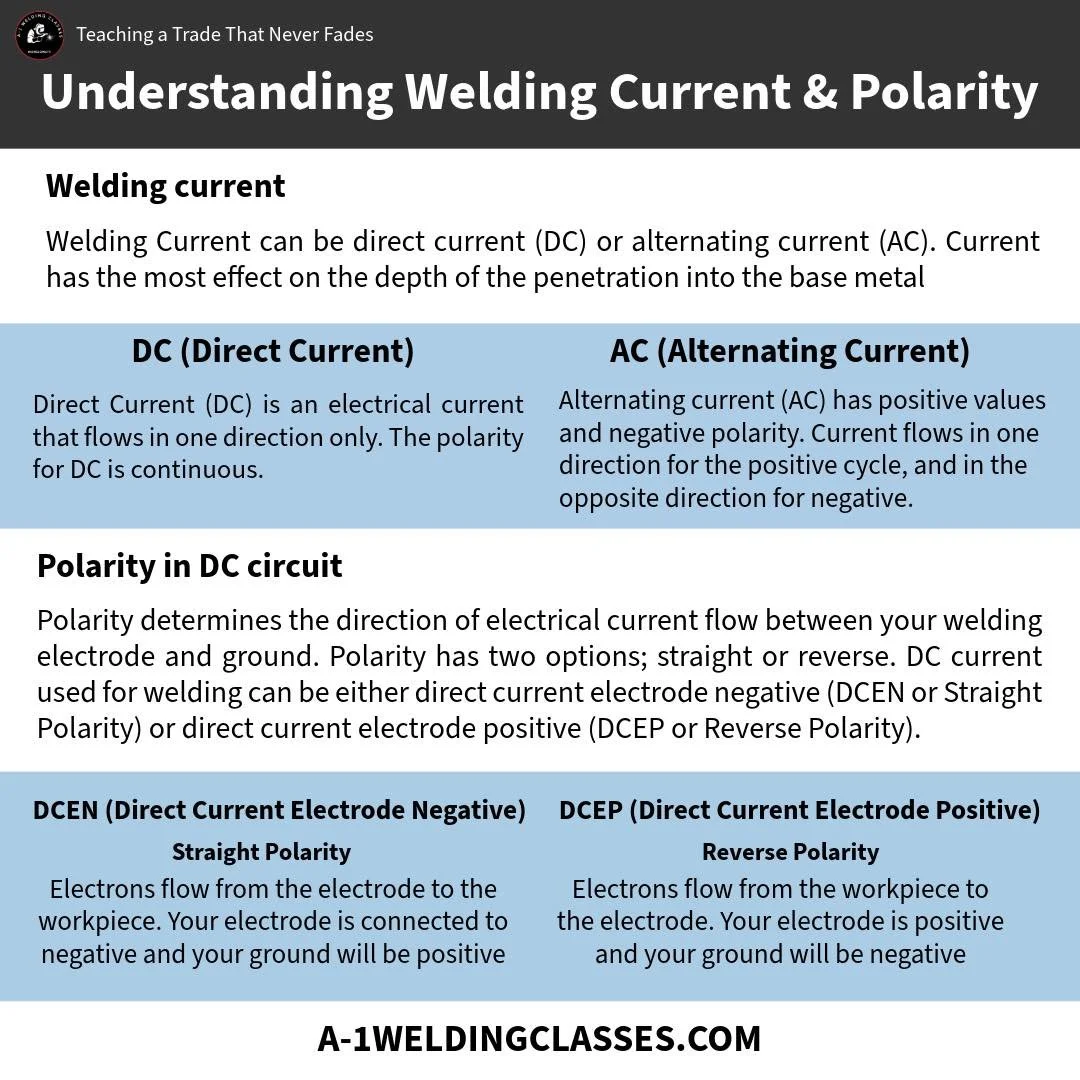
Polarity refers to the direction of the electrical current flow. In welding, we primarily talk about two types:
DC (Direct Current) and AC (Alternating Current)
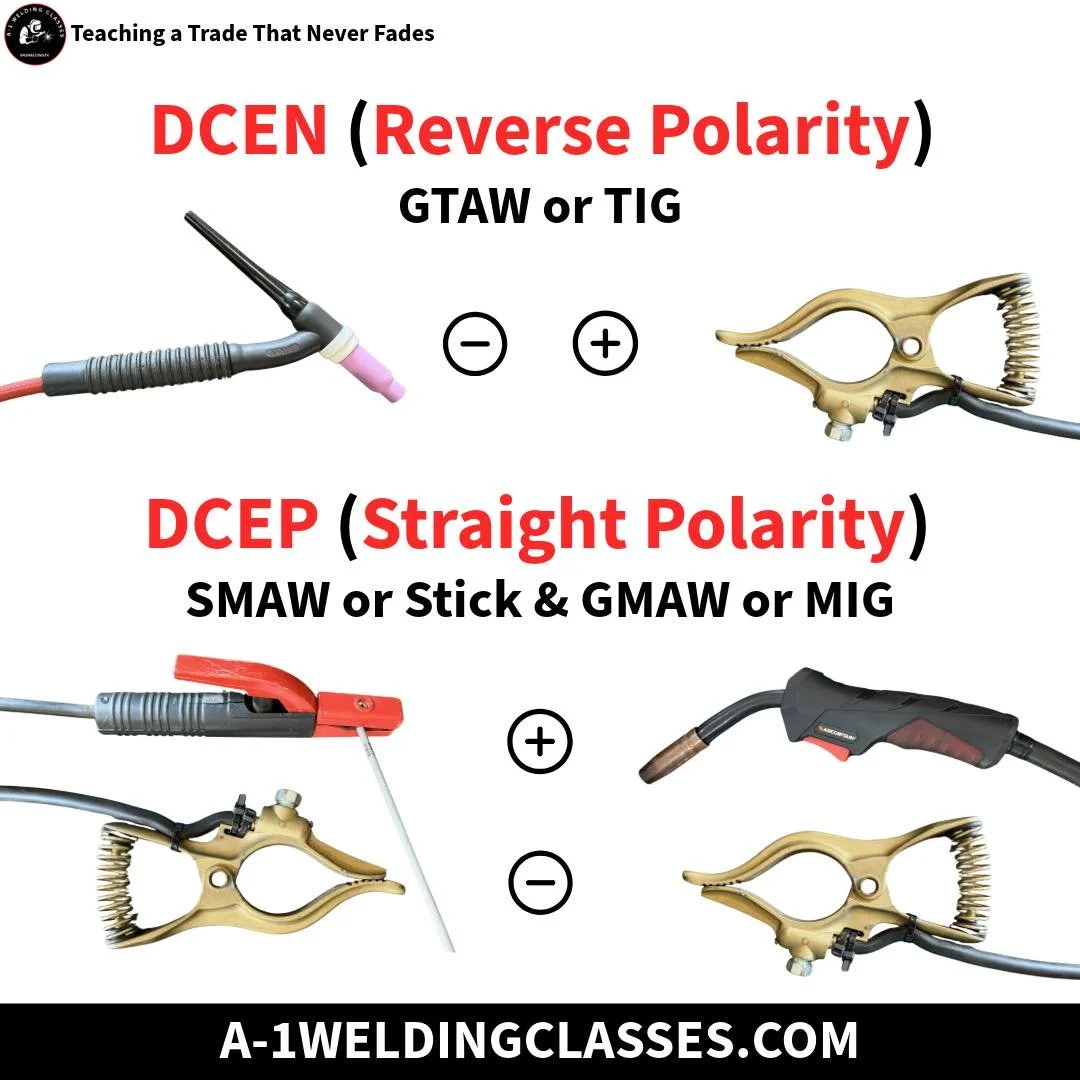
Within DC (Direct Current), we have two configurations: DCEN (Direct Current Electrode Negative), also known as straight polarity, and DCEP (Direct Current Electrode Positive), also known as reverse polarity.
With DCEN, the electrode is negative, and the workpiece is positive. This generally results in a deeper, narrower penetration and a more focused arc. It's often preferred for thinner materials or when you need precise control.
On the other hand, DCEP has the electrode as positive and the workpiece as negative. This typically leads to a wider, shallower penetration and a broader, more fluid puddle. It's a great choice for thicker materials or when you need to fill gaps more easily.
AC (Alternating Current) just as the name suggests, alternates the direction of the current. This can offer a good balance between penetration and cleaning action, making it versatile for certain applications, especially with aluminum.
Choosing the right current and polarity isn't just about following a rule; it's about understanding how they affect the arc, the puddle, and ultimately, the integrity of your weld. It's about making informed decisions that lead to the best possible outcome for your project. Experimenting and observing how different settings behave on scrap material is one of the best ways to build your intuition.
We created this handy chart explaining these in detail for you to help you understand more better.
Mastering these basics will truly elevate your welding skills. We hope you found this helpful and if your still in need of help we are always here for you.
Teaching a Trade That Never Fades